
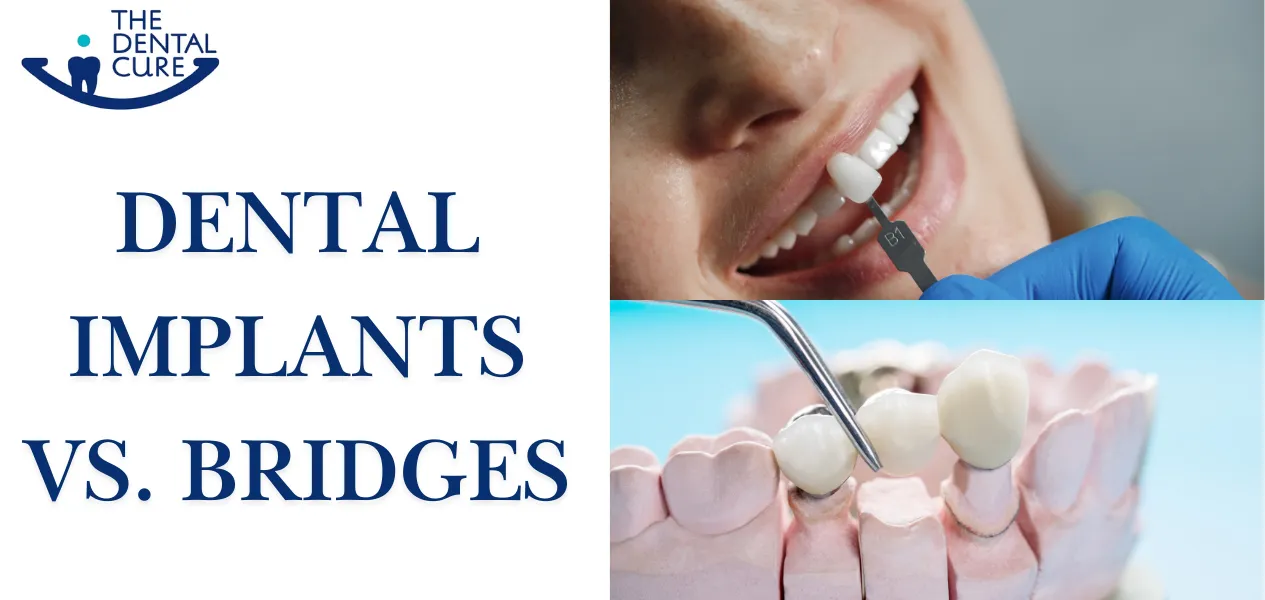
Dental Implants vs. Bridges: Which Is the Better Option for You?
A missing tooth can affect your oral health as well as your appearance and confidence. A tooth loss can cause frustration. However, finding the best way to address this issue is essential, instead of just focusing on the problem. If you have lost a tooth, your dentist may suggest a number of solutions. The two most commonly used methods to address a missing tooth or teeth are dental implants and dental bridges. Both are effective ways to restore a healthy smile.
Sometimes, people can find it confusing to choose between a dental implant and a dental bridge. Here we will furnish all the necessary information to help you choose the right option for yourself and make the right decision between dental implants vs. bridges.
What is a dental implant?
A dental implant refers to a surgical procedure of implanting a titanium post into the jawbone. This titanium post fuses with the jawbone over time and offers a foundation for tooth replacement. An artificial tooth or crown is installed after the implant is fully integrated.
This treatment method is considered the gold standard for replacing a missing tooth. Dental implants are designed for natural function and appearance. Dental implants also prevent bone loss and preserve the health of surrounding teeth. Implants can last a lifetime with proper dental care.
What is a dental bridge?
On the other hand, a dental bridge refers to the installation of a prosthetic tooth to replace a missing tooth. The prosthetic tooth or pontic, is placed in the gap between two teeth. These two existing teeth help to hold the false tooth in its place with two abutment crowns that are fitted over the neighboring teeth to keep the prosthetic tooth in its place.
A dental bridge is a quick treatment option for a missing tooth. It restores one’s ability to chew or bite properly. Dental bridges also improve the appearance of your smile.
Dental implants vs. dental bridges
As we have already discussed what a dental implant and a dental bridge are. Here is a detailed comparison between dental implants and bridges:
Pros of dental implants
-
Bone health: A dental implant preserves your jawbone health by stimulating the jawbone and preventing bone loss.
-
Longevity: If proper care is taken, a tooth implant can last a lifetime. Longevity is one of the most important pros of a dental implant.
-
Higher success rate: Dental implants have a higher success rate in restoring a missing tooth. It is also an ideal dental replacement option for the long term.
-
No impact on neighboring teeth: A dental implant does not impact adjacent teeth. On the other hand, an implant can preserve your neighboring teeth and jawbone.
Cons of dental implants
-
Longer process: A dental implant is a longer process compared to bridges, and you require a longer healing period and multiple visits to the dentist.
-
Higher initial cost: Dental implants have a higher initial cost and can be a bit expensive.
-
Surgery: A dental implant requires a surgical procedure that may not be comfortable for everyone.
Pros and Cons of Dental Bridges
Pros of dental bridges
-
Faster process: Dental bridges require less time for the installation of the prosthetic tooth or teeth. The whole process can be completed within a short time.
-
Lower initial cost: This process also requires a lower initial cost and is a cheaper option compared to dental implants.
-
Used when surgery is not available: In certain cases of a missing tooth or teeth, surgery may not be the most suitable option. In such cases, dental bridges can be the ideal treatment option.
-
Ideal for multiple teeth replacement: An implant is suitable for replacing a single missing tooth. Dental bridges, on the other hand, are ideal for multiple tooth replacement.
Cons of dental bridges
-
Impact on neighboring teeth: Dental bridges can impact the neighboring teeth. As neighboring teeth must be shaped and prepared for installing the false tooth, this negatively impacts neighboring teeth.
-
Bone loss: It does not stimulate the jawbone and cause bone loss over time.
-
Shorter lifespan: Dental bridges have a shorter lifespan compared to dental implants.
Factors to consider while choosing dental implants vs bridges
We have discussed the pros and cons of dental implants and bridges to help you choose between dental implants vs. bridges. Here are some key factors that one should consider when choosing between dental implants and bridges:
-
Preserving healthy teeth: If you want to preserve your healthy teeth, you should choose dental implants over bridges. Dental bridges can weaken or harshly impact neighboring healthy teeth during the process.
-
Longevity: Another factor to consider while discussing dental implants vs. bridges is longevity. If you prioritize the longevity of the solution, an implant can be your ideal option. Dental bridges have a shorter lifespan.
-
Appearance and function: Other factors to consider are appearance and function. Both implants and bridges offer functional and natural-looking replacements for a missing tooth. However, most people feel implants are more natural-looking.
-
Jawbone health: A jawbone can deteriorate because of a missing tooth. Dental implants stimulate and preserve the jawbone. Bridges may not offer the same level of preservation.
-
Cost: Cost is another important factor to consider while choosing between dental implants vs. bridges. Choose dental bridges if you are tight on a budget. And choose implants if cost is not a deciding factor.
Conclusion
Whether you need a dental implant or a bridge depends on several factors, such as cost, the type of treatment you need, the number of teeth you want to cover, etc. Here, we have discussed a comparative guide to Dental Implants vs. Bridges, to help you choose wisely. Also, visit The Dental Cure for the best dental treatment support.